
|
|
 |
A Dedication to my Dad, William John Marck, Jr.
William John (Jack) Marck, Jr.
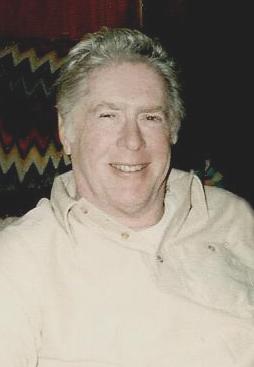
Johns Hopkins Alumni, Soldier, Educator, Father, Traveler, Writer
By John T. Marck
William John (Jack) Marck, Jr., Johns Hopkins Alumni, Class of 1950, who never missed a Blue Jays Lacrosse opening game for 56 years, and a retired teacher with 47 years, 32 in Baltimore County Schools, died Friday July 25, 2008 from complications of renal failure, at his home. The lifelong Maryland resident was 83.
Born and raised in Baltimore, at age ten, began his journalistic avocation by making up a Sunday newsletter, and reported highlights that included the flight of a bi-plane (airplane) over Hillsdale Golf Course in Forest Park. At Garrison Junior High School, he was an editor of the school newspaper “The Ranger,” with Leon Uris. At age thirteen, he sold Liberty and Saturday Evening Post magazines door-to-door as well as the Post, which preceded the News Post newspaper. In 1941, he worked as a salesman in the record department at Stewart’s Department Store, and later at Radio Center in Waverly after school and on weekends.
Following graduation from Baltimore City College High School, he entered the United States Army as a private during World War II. He served in every grade through acting Major, retiring as a Captain in the Medical Corps, after 24 years of active and reserve service. During World War II he served as a combat medic in the Asiatic-Pacific Theater, and served for 165 consecutive days in combat with the 27th Infantry, 25th Division in Luzon, the Philippines, the longest consecutive combat in US History to that time. As first-sergeant of the 27th Infantry Medical detachment, he led the US Medics into Japan, as part of the initial occupation army in September, 1945. They were stationed at a formerly-Japanese air base near Gifu, Japan on the main island, Honshu, with entry gained through the port of Nagoya, by troopship. Among his 13 decorations are the Purple Heart, Bronze Star, and Combat Medical Badge. Along with William Donald Schaefer, Jack led a reserve hospital unit during the time of the Korean and Vietnam conflicts.
After the war, Jack attended John Hopkins University where he graduated in 1950 with his BA in history, and went on to receive his Master of Education, JHU, and his PHD at Hopkins, following graduate work in the PHD program at Stanford University in 1965 as one of only 16 history teachers chosen nationwide to participate. At Johns Hopkins University he followed Russell Baker as an editor of the Hopkins News Letter. He received the Varsity Seal of Co-curriculum activities at Hopkins.
Jack was a teacher and education leader for 47 years. Of this he spent 32 years in Baltimore County schools, beginning his career at Dundalk High School in 1950-59, then to Overlea and Parkville, spending the last 18 years at Perry Hall Senior High School. Here he was Social Studies Department Chairman, teacher, adult education center organizer and summer school principal. During his career he taught 11th and 12th grade US History, modern and contemporary world history, Russian history, psychology, philosophy, journalism, and Problems of Democracy, World history, personal and social problems, and geography. At Dundalk he was the newspaper advisor and yearbook editor at Parkville. Jack also wrote much of Baltimore County’s senior high social studies curriculum, and wrote and edited the Baltimore County Board of Education’s newsletter, the “Know Now.”
Jack was president of TABCO (Teachers’ Association of Baltimore County) and as such negotiated first contract for teachers with the Board of Education, and was able to get cumulative sick leave, personal and bereavement leave for teachers.
An avid sports fan, Jack introduced lacrosse as a varsity sport at Parkville, then at Perry Hall High School. He coached lacrosse for 15 years, and officiated as a Maryland scholastic referee for 12 years. Among the future All-American lacrosse players he coached include Dick Szlasa, Ed Lassahn, Bruce Jaeger, Gary Schreiber and Ernie Webb. Of the hundreds of students he taught over the years included Habern Freeman, who served as Harford County Executive. Jack received the Baltimore County Award for outstanding contributions to education.
After retiring from Baltimore County in 1979, he taught geography and travel agent courses at Villa Julie and Harford Community Colleges.
A huge lacrosse fan with his son John, Jack attended every John Hopkins lacrosse game at Homewood Field, as well as away games, for nearly 60 years with his wife Betts.
In 1980, Jack and Betts opened Marck Time Travel agency, and operated in Bel Air for 15 years. During their lifetime, Jack and Betts traveled to 216 countries and states, on every continent. Together they wrote a book titled, “But The Ice Cream Was Delicious,” that tells of events on their travels to numerous places that include USSR, China, Mongolia, Tibet and Chile. Jack and Betts were among the first Americans to tour the Soviet Union in 1973 and China and the Great Wall in 1982. Among their experiences were that in East Germany and their confrontation with Russian and East German guards that were related in an article by Jack published in American Heritage Magazine in October 2006.
Jack served as president of the Harford County Chamber of Commerce for two terms and oversaw the building of the new headquarters in Bel Air. He also served as president of the Perry Hall-Kingsville Kiwanis Club and as treasurer of Discover Harford County Tourism, and chaired the Seafood Festival held at Havre de Grave, Maryland.
Jack was also an expert on popular music pre-1970, and enjoyed collecting records, beginning with 78 rpm in the 1930s thru thousands of shellac discs, and continued with 33s, 45s, and CDs of today.
Photograph & article copyright ©
2008-2022 by John T. Marck. All
Rights Reserved. This photograph and article may not be resold, reprinted, or
redistributed for compensation of any kind.